

2 Golds, 2 Silvers – Students from the School of Basic Medical Sciences Shine in the National Finals of The 11th China Undergraduate Medical Innovation Tournament & The Belt and Road International Competition


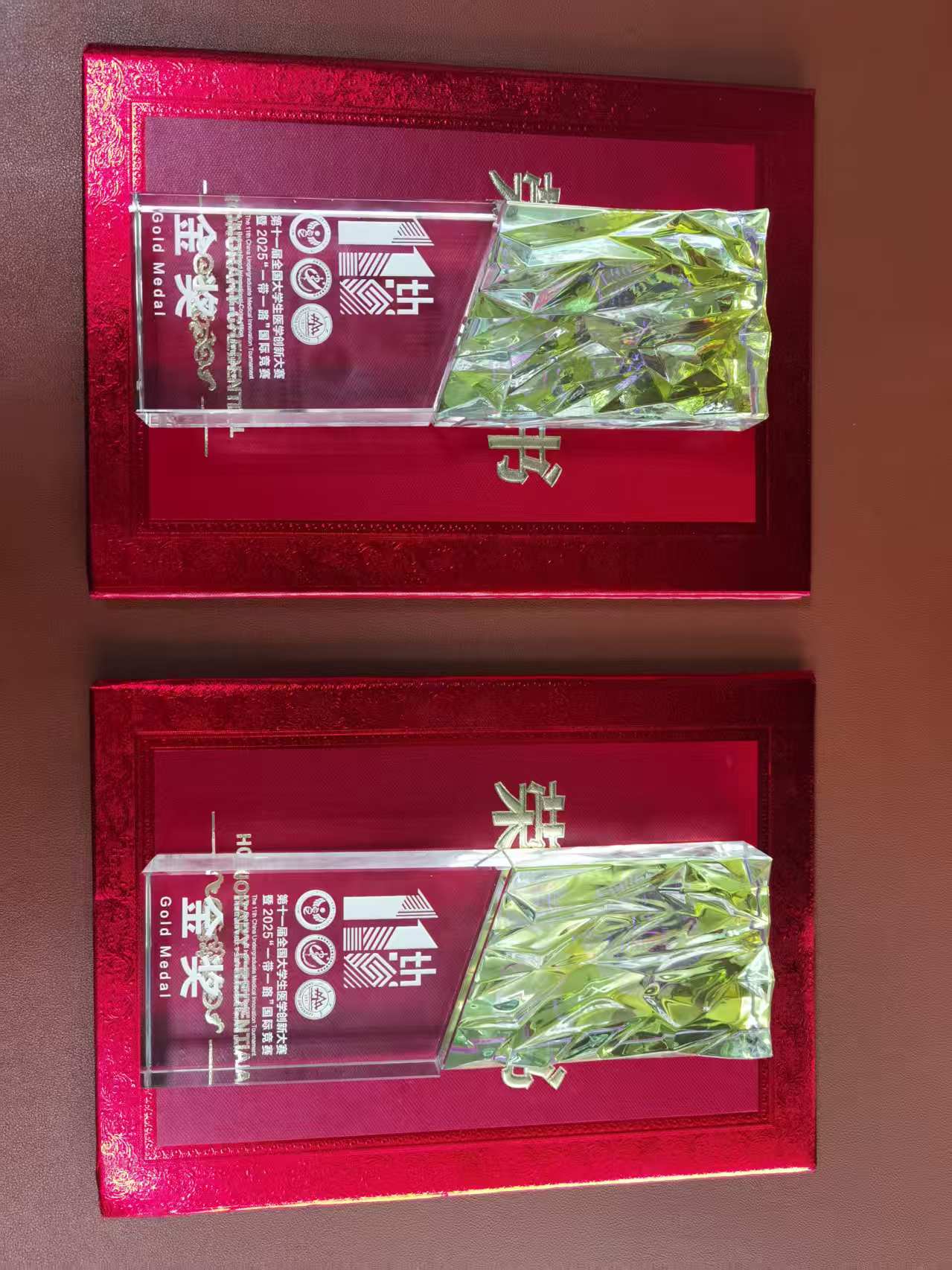
On August 18, the three-day national finals of The 11th China Undergraduate Medical Innovation Tournament & The Belt and Road International Competition successfully concluded at the Central Campus of Shandong University. Five teams from the School of Basic Medical Sciences, Capital Medical University, stood out with their outstanding research innovation capacity and solid professional skills, achieving 2 Gold Awards, 2 Silver Awards, and 1 Best Teamwork Award. Capital Medical University also received the Excellent Organization Award, highlighting the School’s excellence in medical innovation education.
As one of the most influential undergraduate research and innovation competitions in the field of medical education in China, this year’s event reached a record high in both scale and participation. A total of 7,001 projects from 44,175 students representing 263 universities nationwide entered the competition, progressing through four stages: preliminary rounds at the university level, semi-finals, national finals, and the Finalist Championship Round. Contestants competed through a combination of project presentations and on-site defenses, showcasing rigorous scientific logic, clear experimental data, and innovative research perspectives. The competition fully demonstrated the strong research and innovation capacity of the new generation of medical students, as well as the achievements of medical educators in talent cultivation.
The teams from the School of Basic Medical Sciences impressed the judges with their innovative research topics, rigorous experimental designs, and outstanding on-site defenses, earning high praise from the expert panels. These achievements not only recognize the hard work of the participating students and their supervisors but also underscore the School’s strength in medical talent training and scientific innovation.
The Innovative Research Team supervised by Professors Jin Zibing and Yan Zhiqiang won a Gold Award and the Best Teamwork Award with their project “Pathogenesis and Therapeutic Strategies of Jalili Syndrome Based on Retinal Organoid Models.”
The Innovative Design Team supervised by Professors Wang Yilong and Wang Wei won a Gold Award with their project “Bypassing the Blood–Brain Barrier: Delivery of Glibenclamide via Cranial Bone Marrow for the Treatment of Post-Stroke Cerebral Edema and Mechanistic Studies.”
The Innovative Design Team supervised by Professors Liu Xicheng and Huang Haixia won a Silver Award with their project “The Role and Mechanism of Clostridium botulinum and Botulinum Neurotoxin Type A in the Pathogenesis of Depression.”
The Innovative Design Team supervised by Professors Wu Ye and Liu Huirong won a Silver Award with their project “Mitochondrial Damage in the Pathogenesis of Hypertrophic Cardiomyopathy Induced by MYH7; g.794C>T (p.T265I) Mutation.”
Looking ahead, the School of Basic Medical Sciences will continue to deepen innovation and entrepreneurship education, cultivate more medical talents with both innovative spirit and practical ability, and contribute to the advancement of medical science and healthcare.
Written by: Wu Ye, Huang Haixia