

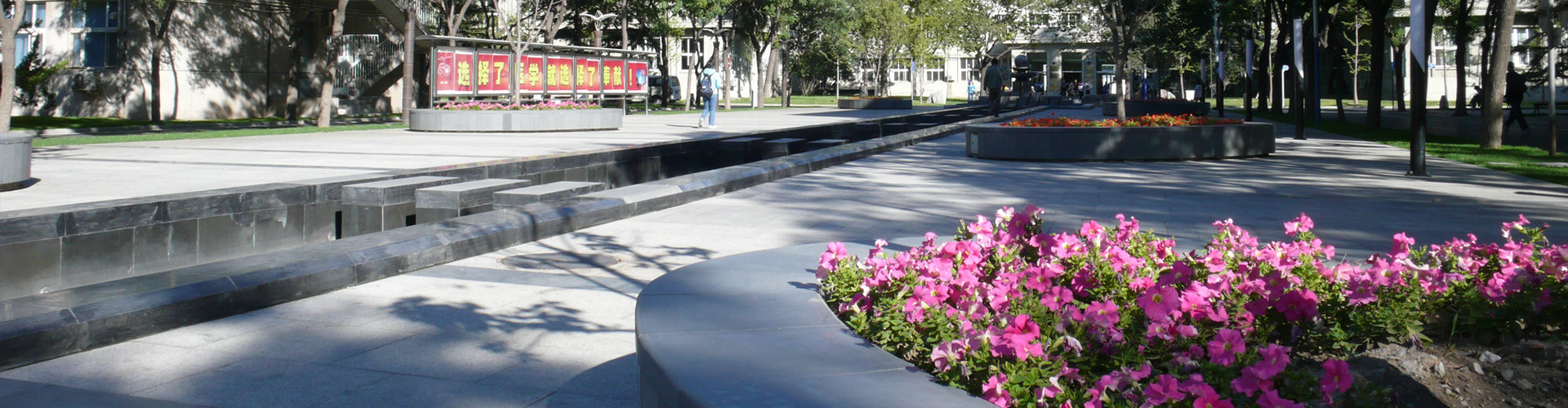
The School of Basic Medical Sciences is one of the largest and most comprehensive colleges on the main campus of Capital Medical University, integrating teaching, research, and student management. The School consists of 11 departments and one experimental teaching center, and currently employs 291 faculty and staff members, including 54 professors and 101 associate professors. Among them are 60 doctoral supervisors and 97 master’s supervisors. The School is home to 557 doctoral and master’s students and more than 2,100 undergraduate students.
The School offers two first-level doctoral programs and postdoctoral research stations in Biology and Basic Medicine, as well as a doctoral/master’s program in Pharmacology. It covers 11 secondary disciplines, with notable international recognition:
Pharmacology and Toxicology and Neuroscience and Behavior rank in the top 0.1% globally (ESI disciplines).
Immunology, Biology and Biochemistry, Molecular Biology and Genetics rank in the top 0.3% globally.
Microbiology ranks in the top 0.5% globally.
The School hosts one provincial and ministerial cultivation base of a State Key Laboratory, two Ministry of Education Key Laboratories (Cardiovascular Remodeling Diseases, Neurodegenerative Diseases), one Beijing Laboratory, four Beijing Key Laboratories, and two Beijing Collaborative Innovation Centers.
The School is responsible for the teaching, curriculum development, textbook construction, reform, and teaching research of basic medical and medical-related biology courses. It has achieved remarkable teaching excellence, including:
2 National First-Class Undergraduate Courses (Neurobiology, Physiology)
1 National Bilingual Teaching Demonstration Program (Medical Cell Biology)
2 National Outstanding Teaching Teams, 1 Beijing Outstanding Teaching Team
1 National Experimental Teaching Demonstration Center
1 National Distinguished Teaching Expert, 6 Distinguished Teaching Experts of Beijing Higher Education, and 1 Young Distinguished Teaching Expert of Beijing Higher Education
The School follows the principle of strengthening research through academic integration, combining basic and clinical sciences while leveraging CMU’s strong clinical resources. It actively pursues national and municipal research projects and has significantly improved its ability to secure major funding. In recent years, the School has undertaken more than 200 research projects, primarily funded by the National Natural Science Foundation of China, the Ministry of Science and Technology, and the Beijing Natural Science Foundation, among others. These projects have led to important contributions to medicine and biology. Over the past five years, faculty members have published hundreds of research papers, including over 100 papers with an impact factor above 10, and have won numerous awards from the Ministry of Education and the Beijing Municipality.
The School also values international academic collaboration. It has established extensive exchange programs with institutions across North America, Europe, Asia, and Hong Kong, and has successfully hosted many international academic conferences.
Since the beginning of the 21st century, profound changes at both the international and national levels have created unprecedented opportunities for growth. With full enthusiasm and a strong sense of mission, all faculty and students of the School of Basic Medical Sciences are committed to the vision of building a world-class, research-oriented medical university.