

School of Basic Medical Sciences Achieves Outstanding Results in the National Graduate Academic Innovation and Achievement Transformation Competition
On August 10, 2025, the inaugural National Graduate Academic Innovation and Achievement Transformation Competition, guided by the National Natural Science Foundation of China and the Higher Education Department of the Ministry of Education, and hosted by the Organizing Committee of the Competition, successfully concluded at the Xinhua Campus of Inner Mongolia Medical University. With the theme of “Fostering Virtue, Driving Academic Innovation, and Promoting Achievement Transformation”, the competition underwent a rigorous selection process, with 305 projects from 84 universities and hospitals across the country advancing to the finals. The projects covered cutting-edge fields such as basic medicine, clinical translation, and interdisciplinary frontiers.
As one of the co-initiating institutions, Academician Ji Xunming, President of Capital Medical University, addressed the opening ceremony. He emphasized that today’s young students and researchers are living in the best era for innovation, and that the competition plays an important role in promoting research and learning, accelerating achievement transformation, and fostering employment opportunities.
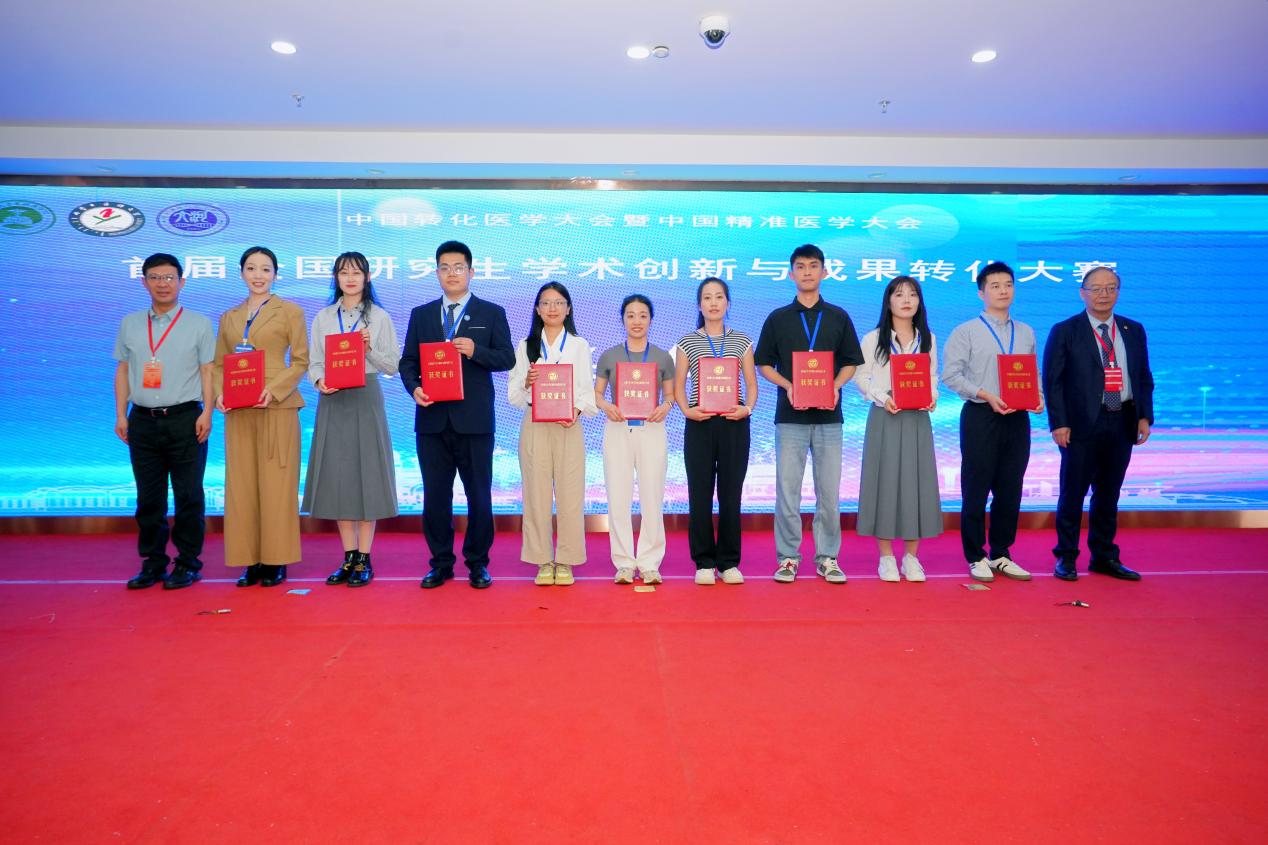
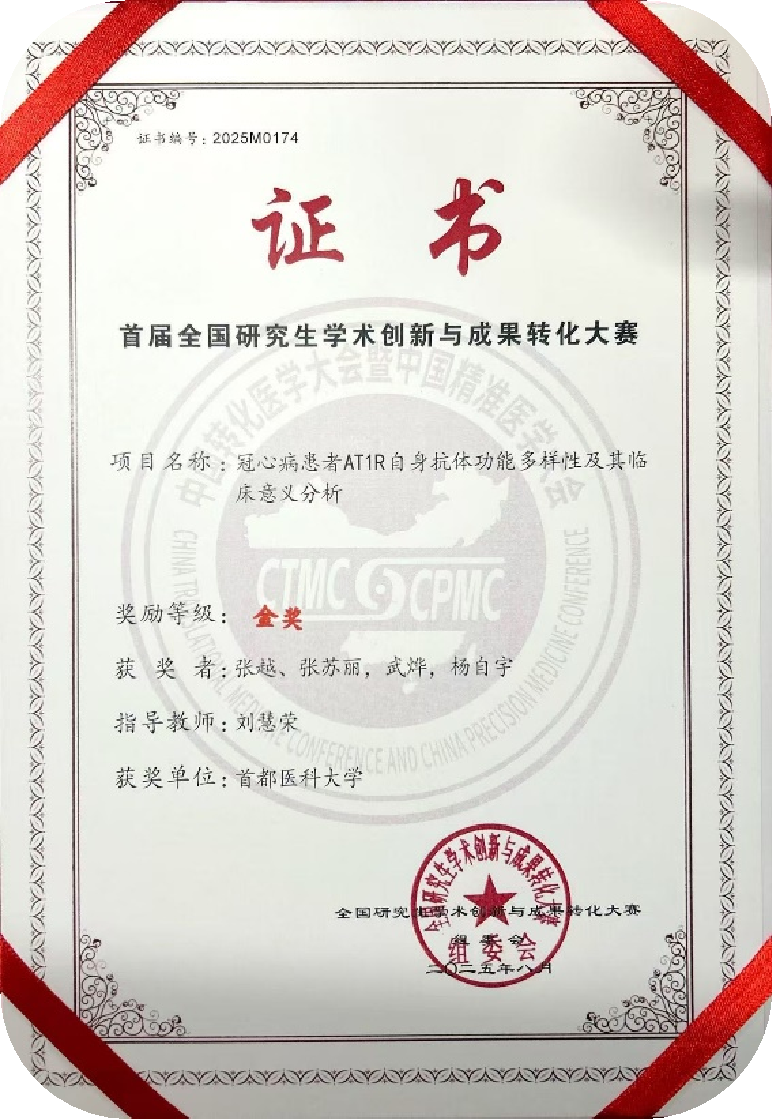
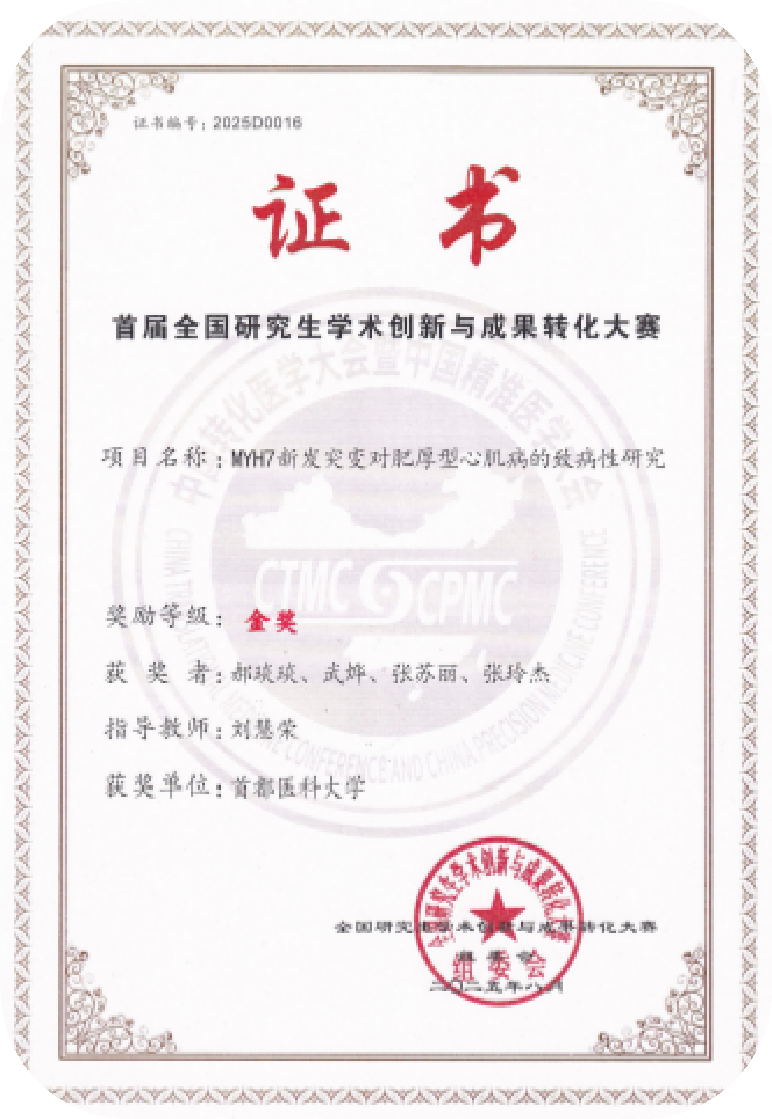
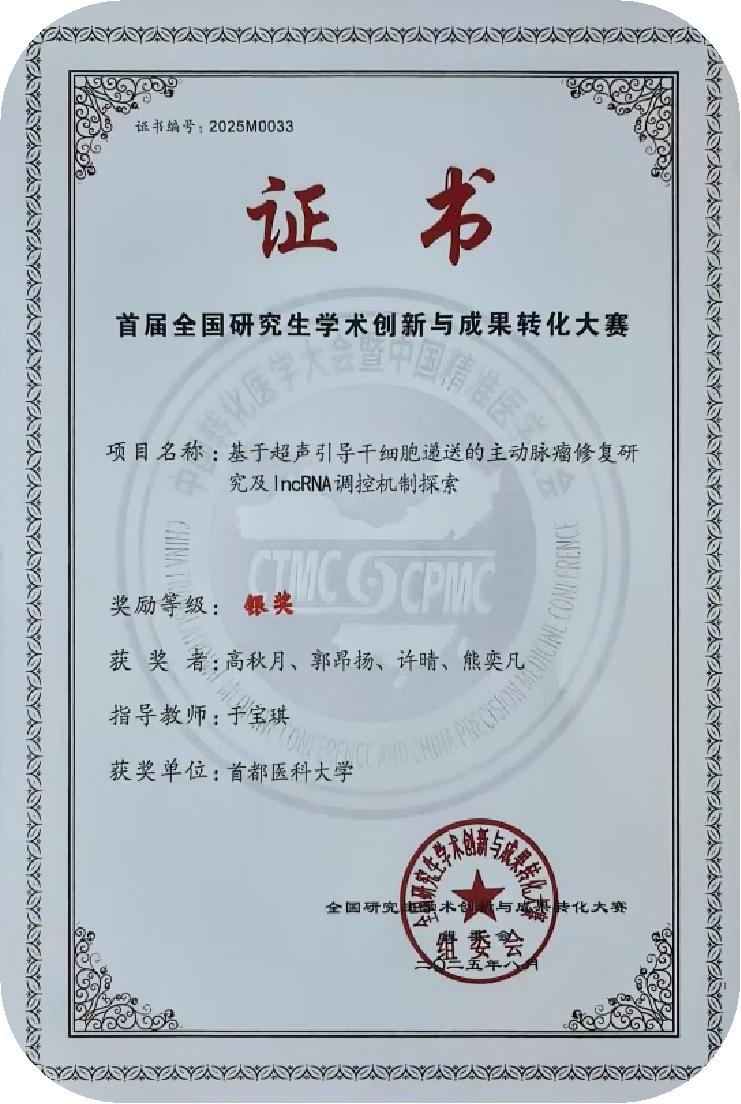
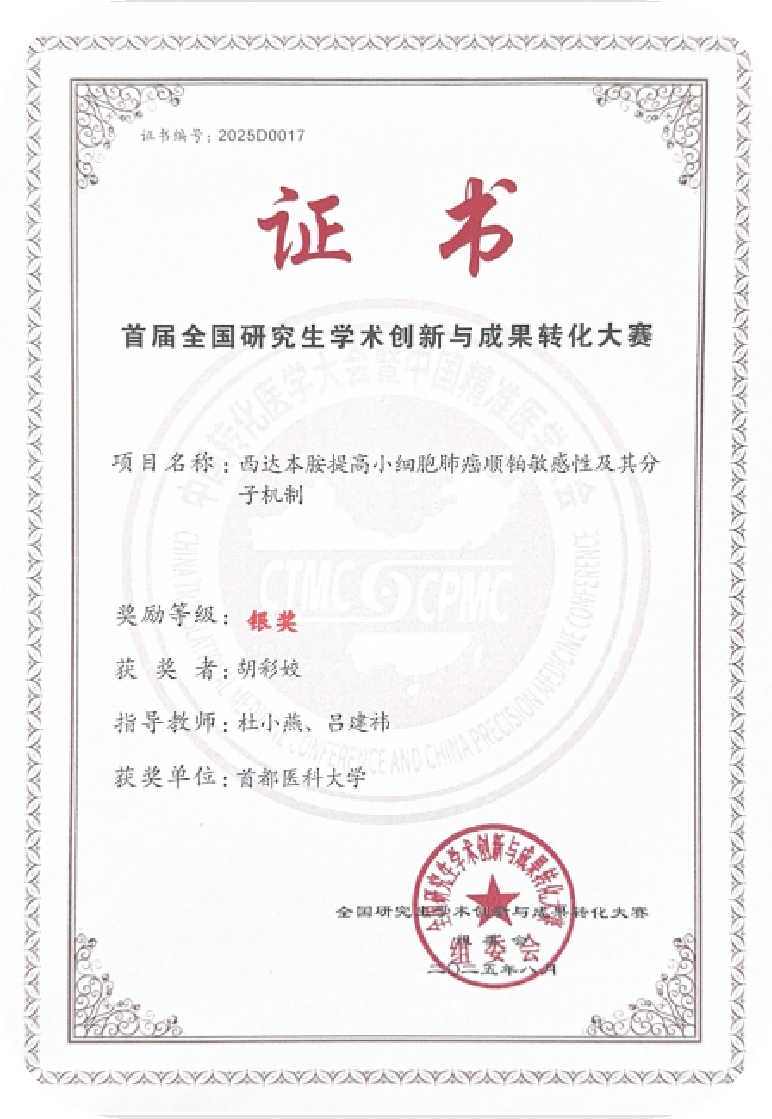
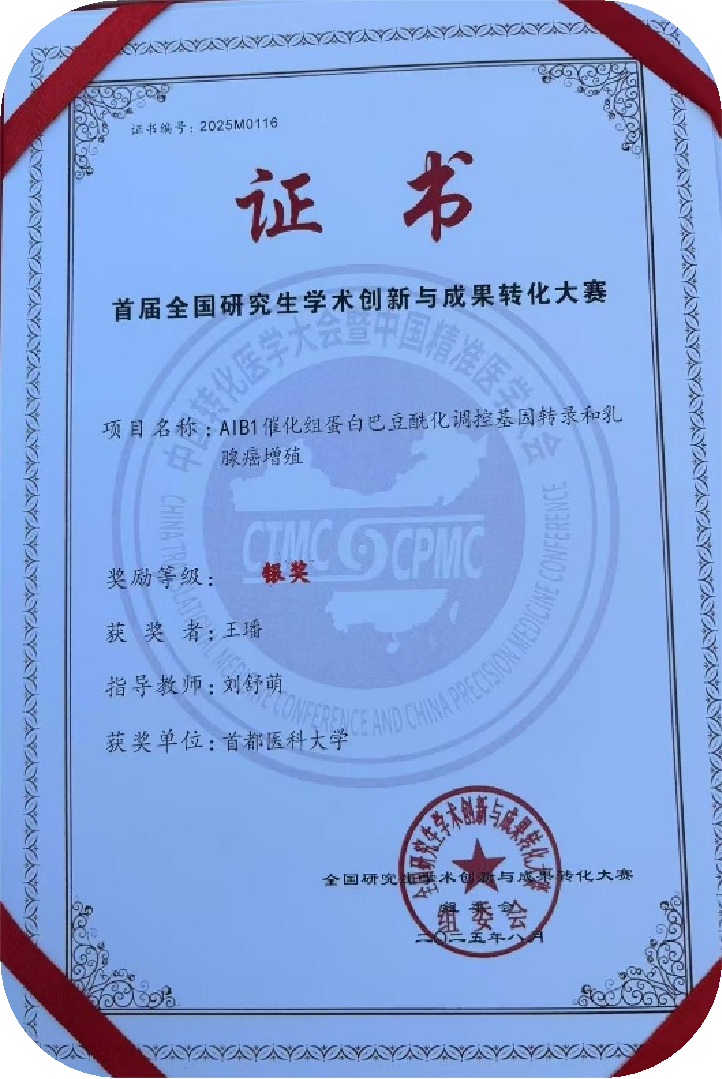
In this competition, the graduate student teams from the School of Basic Medical Sciences, Capital Medical University, stood out with their solid research capabilities and innovative outcomes, winning 2 Gold Awards, 3 Silver Awards, and 9 Bronze Awards. The award-winning projects focused on frontier areas such as the pathogenesis and treatment of cardiovascular diseases and tumors, as well as new drug development, fully demonstrating the School’s remarkable strengths in basic biomedical research and interdisciplinary integration. The detailed award results of the graduate teams are as follows:
No. |
Award |
Project Title |
Awardees |
Supervisors |
1 |
Gold Award |
Pathogenicity Study of Novel MYH7 Mutations in Hypertrophic Cardiomyopathy |
Hao Yanyan |
Liu Huirong |
2 |
Gold Award |
The Functional Heterogeneity Analysis of AT1 Receptor Autoantibodies in Patients with Coronary Heart Disease |
Zhang Yue |
Liu Huirong |
3 |
Silver Award |
Tucidinostat enhances chemosensitivity to cisplatin in small cell lung cancer and its molecular mechanism |
Hu Caijiao |
Du Xiaoyan Lv Jianyi |
4 |
Silver Award |
AIB1 Acts as a Histone Crotonyltransferase to Promote Gene Transcript and Breast Carcinogenesis |
Wang Pan |
Liu Shumeng |
5 |
Silver Award |
Ultrasound-Guided Stem Cell Delivery for Thoracic Aortic Aneurysm Repair and Exploration of lncRNA Regulatory Mechanisms |
Gao Qiuyue |
Yu Baoqi |
6 |
Bronze Award |
"Divide and Conquer by Subtype": ITIH3-Guided Precision Diagnosis and Treatment of Gastric Cancer—From Diagnostic Markers to Novel Targets for Immunotherapy |
Huang Ronghua |
Wang Wei Zhang Chen Mao Liyuan |
7 |
Bronze Award |
NICD3 Regulates TGFBI Expression via SMAD3-Mediated Signaling to Promote Angiogenesis in CRC |
An Rui |
Wang Wei Zhang Chen |
8 |
Bronze Award |
β1-AA Participates in Heart Failure by Promoting Macropinocytosis of CD28 Molecule on CD4+T Cells |
Sun Fei |
Liu Huirong Zhang Suli |
9 |
Bronze Award |
Early predictive markers and therapeutic targets for chronic obstructive pulmonary disease: Discovery of MT-high T cells |
Liu Zengqing |
Wang Wei Sun Ying Cui Ye |
10 |
Bronze Award |
Antidepressant effects and mechanisms of JZ1201:a novel combined selective 5-HT reuptake inhibitor, selective NE reuptake inhibitor and partial 5-HT1A receptor agonist |
Gao Huan |
Jin Zengliang |
11 |
Bronze Award |
Nuclear accumulation of ADAMTS1 zymogen: A novel mechanism promoting chemoresistance and metastasis in breast cancer |
Zhang Zhaohan |
Shan Lin |
12 |
Bronze Award |
Development of specific inhibitors targeting intestinal β-arrestin 2: An innovative way to break through the bottleneck of stress duodenal ulcer treatment |
Wang Yijia |
Feng Xiaoyan |
13 |
Bronze Award |
ADAM10 promotes the development and progression of emphysema by regulating B lymphocyte function |
Lv Ruchao |
Xu Xia |
14 |
Bronze Award |
Targeting VWC2/VWC2L to Regulate AMPAR Synaptic Transmission: A New Mechanism and Treatment Strategy for Drug-Resistant Epilepsy in Children |
Yuan Xinpin |
Wei Mengping |
In addition, Professor Qu Xianjun from the Department of Pharmacology, who also serves as Director of the Basic-Clinical Joint Laboratory, guided two doctoral students—Liang Weishi and Zhang Qiannan from the Joint Laboratory for Spinal Deformity and Spinal Cord Injury Research and Treatment—both of whom won Gold Awards. This once again validated the success of the integrative training model that effectively combines the strengths of basic research and clinical practice.
As the largest and most comprehensive school of Capital Medical University, the School of Basic Medical Sciences is dedicated to cultivating top-tier talents who combine research innovation with translational thinking. The School’s outstanding achievements in this competition highlight its strong capacity in training new generations of medical professionals. Looking ahead, the School will continue to deepen educational reform, promote the transformation of original scientific discoveries from “laboratory” to “production line,” and support graduate students in participating in international academic exchanges, broadening their horizons, enhancing their innovative capacity, and encouraging them to reach new heights in medical science and technology innovation.