

Professors Sun Ying and Wei Wang’s team from the School of Basic Medical Sciences uncovered the critical role of S100A9 in pulmonary vascular remodeling in pulmonary hypertension
Recently, the research team led by Professors Ying Sun and Wei Wang from the Department of Immunology, School of Basic Medical Sciences, Capital Medical University, published an article entitled “Neutrophil–Endothelium Interaction Mediated by S100A9 Promotes Pulmonary Vascular Remodeling During Pulmonary Hypertension” in Advanced Science. The study investigated the biological mechanisms underlying neutrophil–endothelial cell interactions in pulmonary hypertension (PH) and identified S100A9 as a critical mediator. The authors demonstrated that neutrophil-derived S100A9 not only enhanced neutrophil adhesion to endothelial cells but also induced endothelial dysfunction and vascular remodeling by activating the RAGE-associated signaling pathway, thereby promoting the development of PH. Yu Guo, a doctoral candidate at the School of Basic Medical Sciences, is the first author of the paper, and Dr. Jie Liu and Professor Wei Wang from the Department of Immunology are co-corresponding authors.
PH is a severe pulmonary vascular disease characterized by persistently elevated pulmonary arterial pressure. Clinically, vasodilators are commonly used to relieve symptoms and reduce vascular resistance. However, effective therapeutic approaches for pulmonary vascular remodeling, which represents the central pathological process of PH, are still lacking. In recent years, immunotherapy has emerged as a promising therapeutic strategy, showing potential for PH treatment.
The team of Professors Sun and Wang found that both the number and abundance of neutrophils were significantly increased in the lungs of PH models compared with controls. Further mechanistic studies revealed that neutrophils exerted pathogenic effects on pulmonary vasculature primarily through the release of the proinflammatory molecule S100A9. Specifically, neutrophil-derived S100A9 was shown to bind to the receptor RAGE on pulmonary endothelial cells, thereby activating the downstream PI3K–AKT signaling pathway. This activation induced abnormal endothelial proliferation and resistance to apoptosis, leading to intimal thickening and vascular remodeling. Moreover, S100A9 may exacerbate the inflammatory microenvironment of the pulmonary vessel wall by upregulating inflammatory cytokines and enhancing neutrophil adhesion.
These findings not only highlight the pivotal role of neutrophils in the pathogenesis of PH but also suggest S100A9 as a potential therapeutic target, providing new insights into the cellular and molecular mechanisms driving inflammatory pulmonary vascular remodeling.
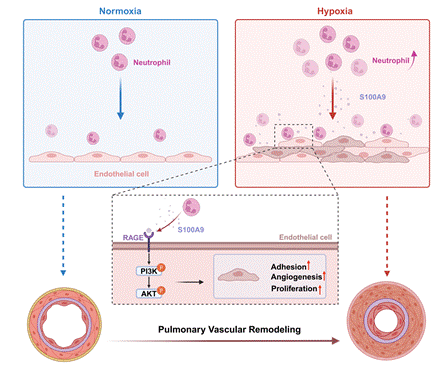
Figure 1. Schematic illustration of the biological mechanisms of neutrophil–endothelial cell interaction in pulmonary hypertension.
This work was supported by the National Natural Science Foundation of China (82090013, 82241011), the Beijing Natural Science Foundation (7242010), the Beijing Nova Program (20240484639), and the “Double First-Class” Innovation Project of Tsinghua University–Capital Medical University (2003980909).
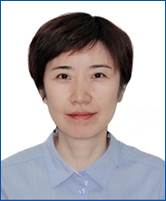
Wei Wang, Professor and Doctoral Supervisor. Professor Wang currently serves as Party Branch Secretary and Dean of the International School, Capital Medical University, as well as Deputy Director of the Department of Pulmonology. She concurrently holds several academic positions, including Vice Chairman of the Beijing Immunology Society, Council Member of the Chinese Society for Immunology, Standing Committee Member of the Allergy Medicine Professional Committee of the Chinese Research Hospital Association, Member of the Asthma Group of the Chinese Medical Association Respiratory Society, and Member of the Basic Research and Translational Medicine Working Group for Allergic Diseases (in preparation) of the Chinese Medical Association Allergy Society.
Her research focuses on the immunological mechanisms of allergic and respiratory diseases. She has led or participated in 26 research projects, including major programs of the National Natural Science Foundation of China. To date, she has published more than 80 scientific papers in journals such as Proceedings of the National Academy of Sciences of the United States of America (PNAS), Journal of Allergy and Clinical Immunology (JACI), Cellular & Molecular Immunology, Allergy, and The Journal of Immunology. She has received the Second Prize of the Beijing Science and Technology Award for Natural Science, and has been granted three national invention patents. In addition, she has served as deputy editor or contributing editor for 16 national-level textbooks, and as chief translator or co-translator for two academic monographs.
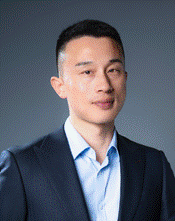
Jie Liu, Senior Experimentalist, Department of Immunology, School of Basic Medical Sciences, Capital Medical University. Liu’s research focuses on the immunological mechanisms underlying pulmonary vascular diseases. As a key member of several research teams, he has participated in major programs of the National Natural Science Foundation of China (NSFC), NSFC General Programs, and Beijing Natural Science Foundation projects. He has published more than 10 research articles as first author or co-corresponding author in journals such as Advanced Science, eBioMedicine, and Hypertension. Notably, his paper in eBioMedicine (2018) has been recognized as a highly cited article, with over 130 citations. In total, he has co-authored more than 50 scientific papers. Liu has received several academic honors, including the Advanced Worker Award of Capital Medical University (2016) and the Second Prize of the Capital Medical University Science and Technology Award for Natural Science (2022).