Department of Physiology and Pathophysiology
1. Department Overview
Historical Evolution
The Department of Physiology and Pathophysiology originated from the establishment of the Teaching and Research Office of Physiology and the Teaching and Research Office of Pathophysiology in 1960. The Physiology program was granted the authority to confer Master's degrees in 1988, designated as a "Beijing Municipal Key Constructing Discipline" in 2002, awarded "Beijing Municipal Excellent Course" status and the right to confer Doctoral degrees in 2005, and was later recognized as a "Beijing Municipal Key Discipline" in 2007. Similarly, the Pathophysiology program obtained the right to confer Master's degrees in 1988, was classified as a "Beijing Municipal Key Constructing Discipline" in 2002, and received authorization to confer Doctoral degrees in 2008. Both disciplines currently support postdoctoral research fellowship programs. In 2005, the two teaching and research offices were integrated to form the current Department of Physiology and Pathophysiology.
Features, Advantages & Research Directions
The department capitalizes on the synergistic relationship between Physiology and Pathophysiology, directing its research efforts toward three core domains: the nervous system, the cardiovascular system, and the digestive system. It has developed an integrated paradigm for medical research and an educational philosophy encapsulated in the principle of "Integrating Physiology and Pathophysiology, Linking Homeostasis and Imbalance, and Bridging Basic and Clinical Sciences," with the aim of investigating the dynamic interplay between the fundamental aspects of life and the underlying mechanisms of disease.
Platform Support
The facility accommodates specialized research laboratories, including the Neurophysiology and Pathophysiology Laboratory, the Cardiovascular Physiology and Pathophysiology Laboratory, and the Digestive Physiology and Pathophysiology Laboratory. Furthermore, it leverages key research platforms such as the MOE Key Laboratory of Neurodegenerative Diseases, the Beijing State Key Laboratory of Major Brain Disorders (a joint initiative co-constructed by the Ministry and the Province), the MOE Key Laboratory for Remodeling-Related Cardiovascular Diseases, and the Beijing Laboratory for Cardiovascular Precision Medicine, thereby establishing a distinctive and integrated research system.
Discipline Achievements & Honors
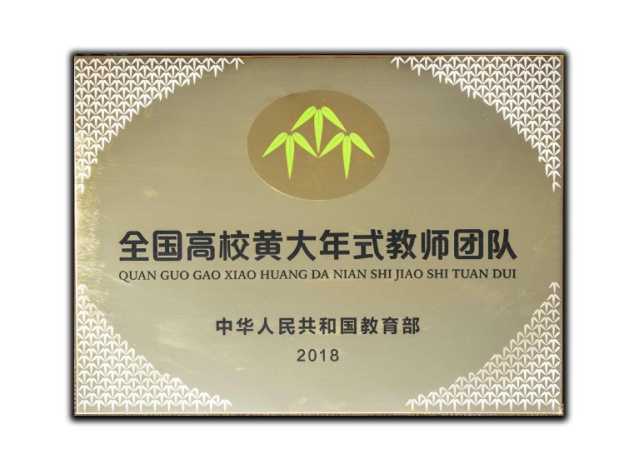
The department has been awarded prestigious titles, including the "First National Huang Danian-Style Faculty Team," the "National Course Ideology and Politics Demonstration Team," the "Beijing Municipal Workers' Pioneer Crew," and the "Beijing Municipal Excellent Education Team."
2. Faculty Profile
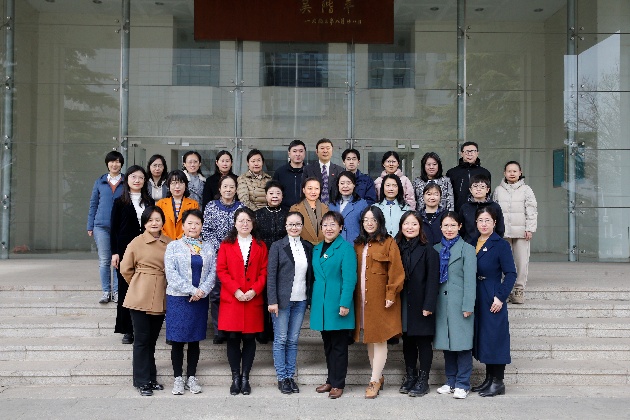
The department is proud to have a high-caliber and well-structured faculty team consisting of 31 members, including 8 Professors (Doctoral Supervisors), 15 Associate Professors (Master's Supervisors), 5 Lecturers, and 3 Technicians. All faculty members hold doctoral degrees, and approximately 70% have experience studying or receiving training abroad. The team also comprises several distinguished individuals, including 3 Beijing Municipal Teaching Masters, 1 Beijing Municipal Young Teaching Master, 1 Beijing Municipal Excellent Teacher, 1 recipient of the Capital Labor Medal, 1 Beijing Great Wall Scholar, 1 Young Beijing Scholar, and 1 Beijing Municipal Excellent Grassroots Party Organization Secretary.
3. Teaching Activities
Courses Offered
The department offers a total of 21 compulsory and elective courses to undergraduate and specialized students across various programs, including Clinical Medicine, Stomatology, Nursing, Biomedical Engineering, and Rehabilitation Therapy. These courses include Physiology (a National First-Class Undergraduate Course and Ministry of Education Ideological and Political Demonstration Course), Pathophysiology, Medical Physiology, Introduction to Functional Sciences, Advanced Physiology, and Geriatric Medicine. For graduate students, the department provides 11 core courses, such as Patch-Clamp Technique and Ion Channel Research, Cardiovascular Translational Medicine, and Fundamentals of Scientific Research. These courses cover key areas such as disciplinary theory, experimental techniques, thesis writing, and academic standards.
Teaching Model & Achievements
By implementing a "Theory-Experiment-Clinical Case" trinity teaching model, the department undertakes an annual undergraduate teaching workload exceeding 3,150 credit hours and approximately 214 credit hours for graduate programs. Over the past three years, the department has launched five provincial-level and twelve university-level teaching reform initiatives, and has been awarded one provincial Second Prize and one university Grand Prize for Teaching Achievements. It has hosted 26 teaching workshops, training more than 1,200 faculty members, and its virtual simulation experimental teaching program has been adopted by eight institutions. Additionally, the MOOC Practical Physiology, available on the National Smart Education Platform, serves students from 12 universities with over 10,000 enrollments.
Student Training
The department has cumulatively trained 84 Master's and 73 Doctoral students over the years. In the past five years alone, 7 students received National Doctoral/Master's Scholarships, and 4 were honored with the title of "Beijing Municipal Outstanding Graduates." More than half of the students have presented their research at academic conferences, and over 80% of graduates are currently employed in Grade-A tertiary hospitals, research institutions, or universities. Faculty members have guided undergraduate students to win 3 First Prizes in the National Life Sciences Competition and 1 Grand Prize in the "Challenge Cup" competition, with more than 10 student-authored research papers published in academic journals.
4. Research Activities
Research Directions
Neuroscience System: This initiative focuses on the early screening and intervention of Parkinson's disease and Alzheimer's disease. It integrates functional modulation approaches with neurological disorder treatments, explores the underlying neural circuit mechanisms, and investigates the application of artificial intelligence and brain-computer interface technologies. Additionally, it has led to the establishment of a Medical-Engineering Integration Laboratory.
Cardiovascular System: This research focuses on elucidating the molecular mechanisms underlying vascular remodeling in hypertension, the role of autoantibodies in cardiovascular diseases, and the interplay between glucose and lipid metabolism disorders and heart-kidney interactions, supported by an established clinical database.
Digestive System: This study systematically investigates the regulatory mechanisms of the "brain-gut axis," "lung-gut axis," and "liver-gut axis," the mechanisms underlying inflammation-associated carcinogenesis in the gastrointestinal tract, and gut microbiota dysbiosis associated with gastrointestinal dysfunction, leading to the identification of several key functional bacterial strains.
Research Projects
In recent years, the department has participated in various significant research initiatives, including the National Basic Research Program of China (973 Program), National Major Research Instrument Development Projects, and Major Chronic Disease Projects supported by the Ministry of Science and Technology (MOST). Since 2021, the department has successfully obtained funding for 32 research projects, including National Key R&D Programs, NSFC Joint Funds, NSFC Major Research Plan Cultivation Projects, NSFC General Projects, and projects funded by the Beijing Natural Science Foundation, with total research funding exceeding 15 million RMB.
Academic Achievements
Over the past five years, the department has published 109 SCI-indexed articles, including 9 publications in journals with an impact factor exceeding 10, in renowned international journals such as Cell Metabolism, Gut Microbes, Molecular Psychiatry, and Antioxidants & Redox Signaling. The department has also been recognized with one Huaxia Medical Science and Technology Award. Emphasizing interdisciplinary research and clinical translation, it has established collaborative sample banks with affiliated hospitals and actively participates in both national and international research collaborations.