Department of Cell Biology
- Overview of the Department of Cell Biology
The Department of Cell Biology at Capital Medical University was established in 1996 and is currently affiliated with the School of Basic Medical Sciences. Since its inception, it has been recognized twice as a Key Construction Discipline of Beijing (1996 and 2001) and was approved as a Beijing Key Discipline in January 2008. In August 2003, the department was granted the authority to confer doctoral degrees, making it one of the earliest medical institutions in China to establish a doctoral program in cell biology. Guided by the mission of "advancing fundamental research, promoting translational medicine, and cultivating specialized talent," the department adopts a disease-oriented approach, leveraging its strong foundation in cell structure and function research. Focusing on cell signaling pathways and intercellular interaction mechanisms, it serves as an interdisciplinary platform bridging basic science and clinical medicine. By elucidating the pathological mechanisms of cellular dysfunction, the department aims to provide a scientific basis for early disease diagnosis and personalized therapy, facilitate the translational application of cell biology research, and contribute to the realization of Healthy China.
- Staff/Faculty Details of the Department
The department has established a well-structured faculty team, consisting of: 5 Professors (including academic leaders), 7 Associate Professors, 3 Lecturers, and 2 Laboratory Technicians. Among them: 5 faculty members serve as Ph.D. supervisors, 7 serve as Master’s supervisors. Notably, the faculty includes: 1 Beijing Distinguished Teaching Scholar, 2 recipients of Special Government Allowances and 3 Beijing Rising Stars in Science and Technology. This team combines extensive research expertise, teaching excellence, and a strong commitment to talent development, ensuring high-quality education and innovative research in cell biology.
- Education and Teaching
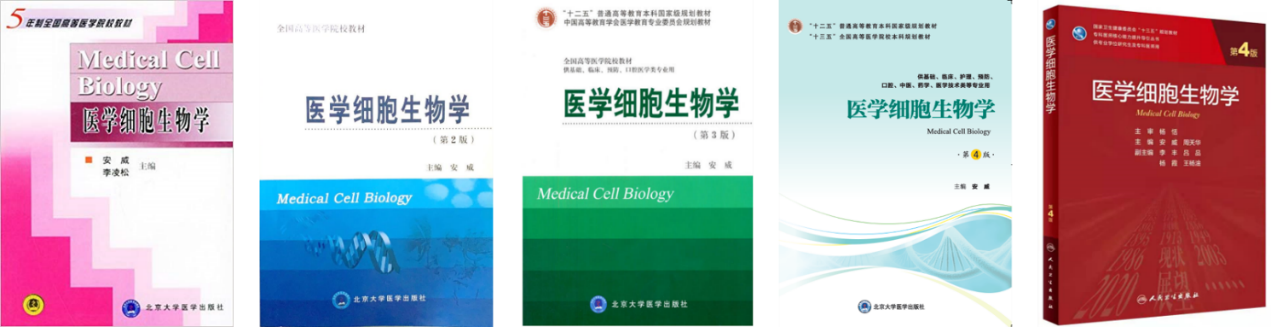
The Department of Cell Biology has long been committed to talent cultivation and continuously improving the quality of education. As one of the most fundamental disciplines in life sciences, Cell Biology has been offered as one of the earliest biology courses since the founding of Capital Medical University. It serves as a degree-required course for undergraduates in clinical medicine, dentistry, preventive medicine, nursing, and related programs. The Medical Cell Biology course was recognized as a Beijing Municipal Elite Course.
Currently, our department offers the following compulsory and elective courses for undergraduate, long-term program, five-year undergraduate, international students, as well as master's and doctoral candidates:
- Medical Cell Biology
- Advances in Cell Biology Research
- Lectures on Cell Biology
- Cell Biology Experimental Techniques
- Practical Animal Cell Culture Techniques
- Research Methods and Experimental Techniques in Cell Biology
- Professional English for Basic Medicine
The curriculum is designed not only to teach fundamental theories of cell biology but also to cultivate students' scientific research thinking, experimental skills, and abilities in comprehensive analysis and problem-solving. It aims to enhance their capacity to connect theoretical knowledge with practical medical issues and develop a deeper understanding of medical problems.
- Scientific Research
The Department of Cell Biology at Capital Medical University has established a distinctive research advantage in liver regeneration, fibrosis reversal, and tumor mechanisms through its "Basic-Clinical-Translational" integrated research model. By deeply leveraging the clinical resources of its affiliated hospitals, undertaking major national research projects, and expanding into cutting-edge areas such as protein modifications, the department continues to reinforce its leading role in the field of medical cell biology.
Over the past decade, the Department of Cell Biology has undertaken more than 50 national-level research projects, including grants from the National Natural Science Foundation of China (NSFC), the Beijing Natural Science Foundation. Professor Xie Ping has long been dedicated to investigating the regulatory mechanisms of tumorigenesis and progression. Her representative work has been published in high-impact journals in cell biology and oncology, including Cell Research, Nature Communications, Cell Reports, and Oncogene. Professors An Wei and Li Liying have focused on liver disease research, with their key findings published in leading journals such as Hepatology, Journal of Hepatology, Cell Death & Differentiation, and Cell Reports. The related research has been granted multiple patents and honored with prestigious awards, including the National Science and Technology Award and the Beijing Natural Science and Technology Award.
Research mainly focused on the followings:
(1) Professor An Wei's Team: Research on hepatocyte-stimulating factor ALR to alleviate liver ischemia-reperfusion injury and its mechanisms, the protective effects and molecular mechanisms in non-alcoholic fatty liver disease and liver fibrosis, as well as liver injury and mitochondrial protection dynamics.
(2) Professor Li Liying's Team: Investigates the roles and molecular mechanisms of bone marrow mesenchymal stem cells, monocyte-macrophages, neutrophils, etc., in liver injury, inflammation, fibrosis, and cirrhosis, with a particular focus on the mechanistic roles of endogenous bioactive molecules such as sphingosine phosphate, 15-deoxy-prostaglandin J2, and cannabinoid receptors in these processes.
(3) Professor Wang Yutong's Team: Studies the relationship between apolipoprotein A-I and cholesterol-phospholipid transport disorders in liver disease development, as well as the molecular mechanisms of endoplasmic reticulum stress and apoptosis.
(4) Professor Zhang Haiyan's Team: Focuses on the molecular regulation of liver stem cells and human adipose-derived stem cells in their directed maturation into hepatocytes, as well as stem cell differentiation and its application in liver disease treatment.
(5) Professor Xie Ping's Team: Explores the functions and mechanisms of protein neddylation in tumor occurrence, recurrence, metastasis, and drug resistance, and analyzes novel patterns in the composition of the neddylation machinery and its new functions and mechanisms in tumor progression.
- Career Outcomes of Graduates
The Department of Cell Biology provides graduates with extensive career development opportunities. Our alumni demonstrate solid professional competencies, outstanding research capabilities, and strong adaptability, making them highly competitive in both domestic and international job markets with diverse career trajectories. A significant number of graduates pursue academic careers in universities and research institutions, contributing to scientific advancements in cell biology and related disciplines. Others join hospitals and clinical laboratories, applying their expertise to translational medicine and diagnostic fields. The rapidly growing biopharmaceutical industry has also attracted a considerable number of our graduates, who actively engage in drug discovery, and biotechnological innovation. Additionally, a notable proportion of students opt for further studies at world-renowned institutions abroad, broadening their research perspectives.