

Department of Pathology
The Department of Pathology at Capital Medical University, established in 1960, has grown into a leading academic and research institution. It was authorized to grant master’s degrees in 1981, designated as a Key Discipline of Beijing in 2002, and approved to confer both doctoral and master’s degrees in Clinical Pathology in 2007. In 2012, it further earned the right to award doctoral degrees in Pathology and was reaffirmed as a Beijing Key Discipline. The department comprises 12 faculty members and 3 technical staff, including 1 doctoral supervisor and 8 master’s supervisors. All faculty hold doctoral degrees, with 8 also serving as qualified clinicians. Teaching spans a broad spectrum, encompassing undergraduate, long-term (5+3), international, master’s, doctoral, and continuing education programs, covering nearly all university majors. With an annual teaching load of approximately 1,800 hours, the department’s courses are highly regarded by students. Research focuses on neuropathology, cardiovascular pathology, and tumor pathology. In recent years, the department has secured over 10 national and provincial research projects and published more than 30 papers in reputable journals.
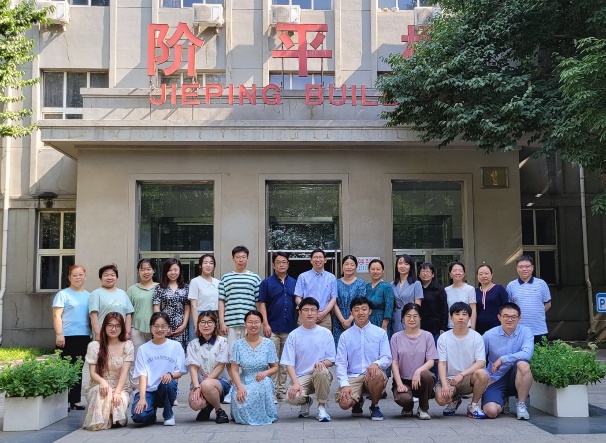
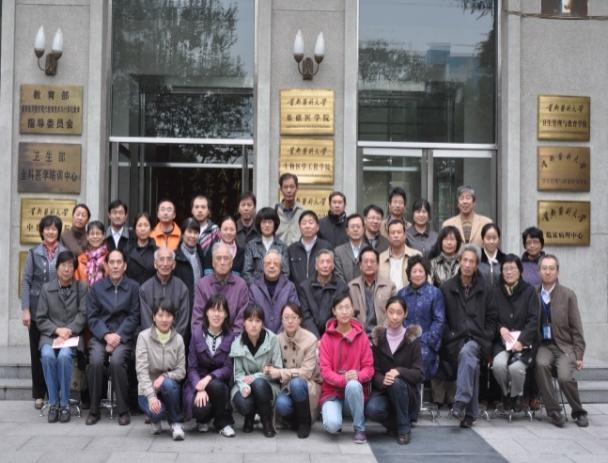
The Department of Pathology currently comprises 15 faculty and technical staff members, many of whom have international research or training experience. Through a strategic balance of external recruitment and in-house development, the department has attracted distinguished experts from China and abroad to enhance graduate education, teaching, and research mentorship. These efforts have significantly strengthened the disciplinary faculty team and advanced the department’s academic excellence.
The Department is responsible for teaching both theoretical and practical pathology-related courses for programs in Clinical Medicine, Stomatology, Nursing, Traditional Chinese Medicine, and the International School of Clinical Medicine, with an annual teaching load of nearly 1,800 hours. Undergraduate courses offered include Pathology, Molecular Pathology, Pathology of the Human Body and Motor System, Introduction to Pathology and Pathophysiology, and Abnormal Human Morphology. In addition, the department provides graduate-level courses such as General Pathology and Neuropathology for master’s and doctoral students. The teaching team includes several doctoral and master’s supervisors, and multiple clinical experts are invited to participate in routine teaching. Each year, the department actively organizes extracurricular activities for undergraduates, supervises thesis writing for students in basic medical sciences, and guides undergraduates in scientific innovation competitions, earning numerous national and university-level awards. The department places strong emphasis on teaching reform. In recent years, it has undertaken more than 10 education reform projects at the municipal and university level, published more than 20 teaching papers, and received multiple municipal awards for teaching achievements, MOOCs, and teaching competitions. Faculty members have also organized and contributed to the publication of several textbooks.
Pathology bridges basic science and clinical medicine, serving as a cornerstone of medical practice, education, and research. The Department of Pathology follows the principle of “clinical orientation, medical service, fundamental strength, and interdisciplinary integration”. Leveraging the rich resources of Capital Medical University’s affiliated hospitals, the department integrates basic and clinical research to advance the understanding of disease etiology, mechanisms, early diagnosis, and treatment strategies. The department collaborates extensively with leading hospitals in Beijing, conducting research on depression, Parkinson’s disease, renal cancer, cardiovascular disease, and hearing reconstruction, while also playing a vital role in graduate education and training.
Research Strengths:
Neuropsychiatric Pathology: neural circuit mechanisms of depression and epilepsy
Cardiovascular Pathology: molecular mechanisms of hypertension, cardiac remodeling, and heart failure
Tumor Pathology: molecular subtyping and mechanisms of lymphoma, lung, urogenital, and reproductive system tumors
With state-of-the-art platforms in morphology, ultrastructural, immuno-, and molecular pathology, the department provides strong support for interdisciplinary research. In recent years, it has undertaken more than 10 national and provincial projects and published over 30 papers in leading journals, including PNAS. The department also fosters international collaboration, partnering with Karolinska Institutet (Sweden), Harvard Medical School (USA), and the University of British Columbia (Canada) in joint research and graduate training.